Vehicle interior
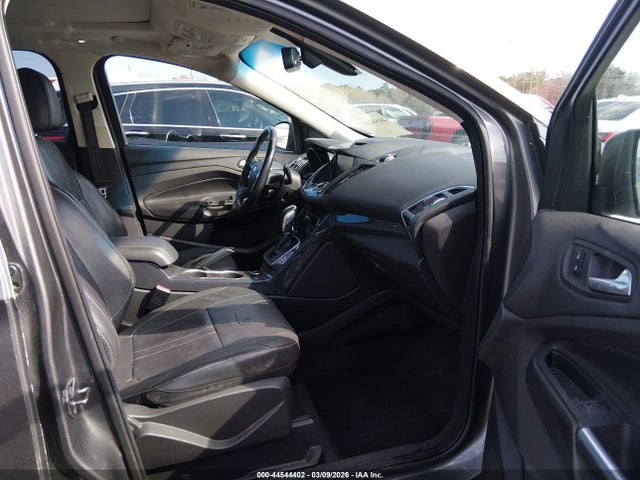
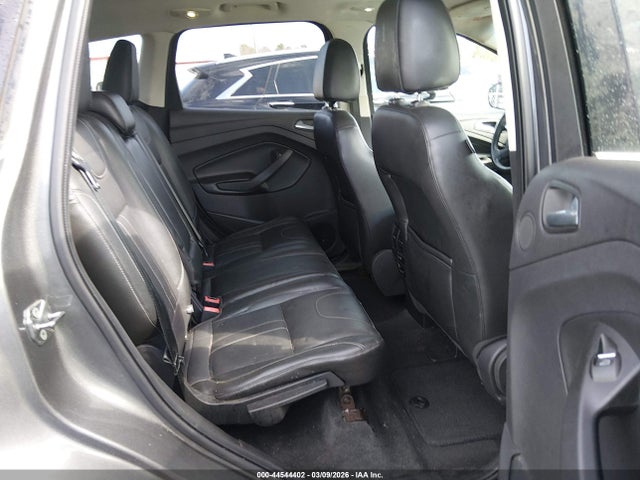
The 2013 Ford Escape Titanium's interior reflects a blend of practicality and modern design typical of its era. The cabin features gray upholstery that matches the exterior, creating a cohesive aesthetic. However, given the vehicle’s history as a rebuilt salvage unit, there are likely signs of prior damage or repairs affecting structural integrity and comfort. The dashboard layout is straightforward, with climate controls and audio system access designed for ease of use. While the 2013 model introduced updated infotainment features in higher trims, this Titanium version appears to retain basic functionality without advanced tech integration like Apple CarPlay or Android Auto support.
The front seats offer adequate bolstering and adjustability, ensuring long-distance comfort; however, rear passenger space remains limited due to the compact SUV design. The cargo area behind the second row can hold a moderate amount of luggage but becomes constrained when all seats are in use. Despite its salvage status, the interior seems free from severe wear or damage—indicating that repairs were likely focused on structural and safety components rather than cosmetic refinements.
Vehicle exterior
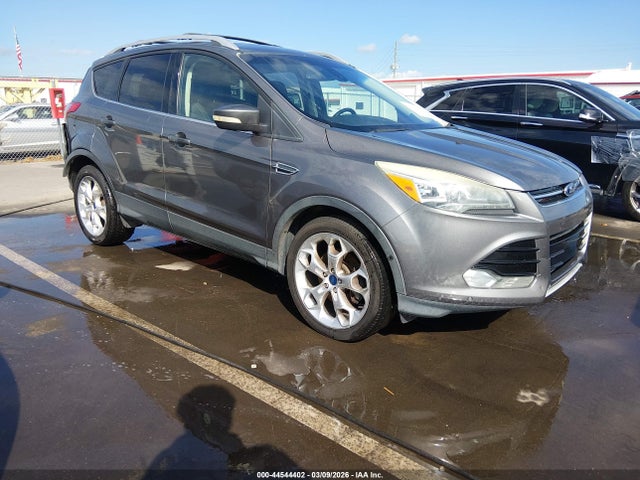
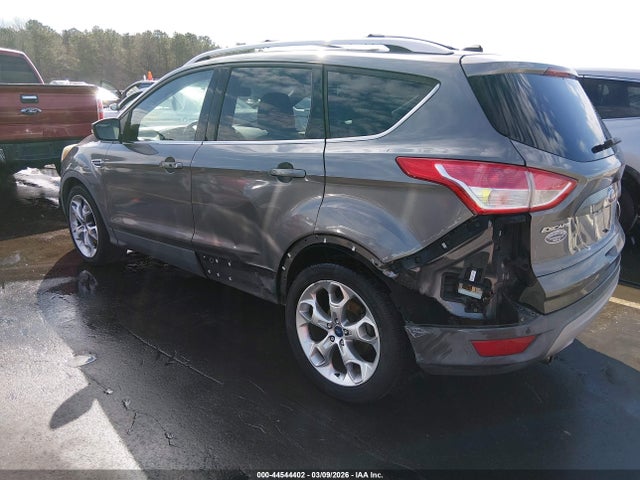
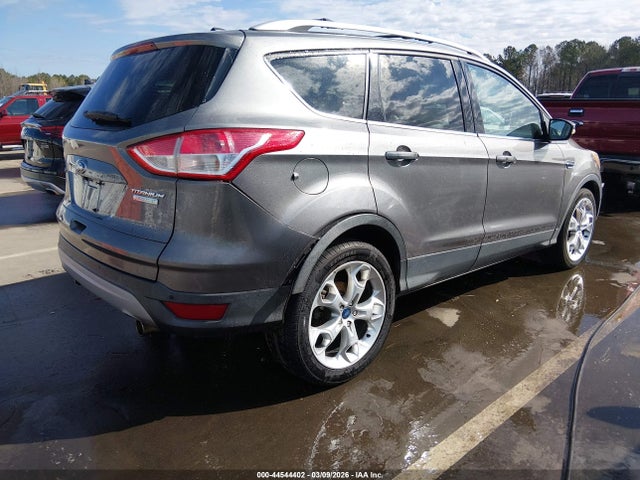
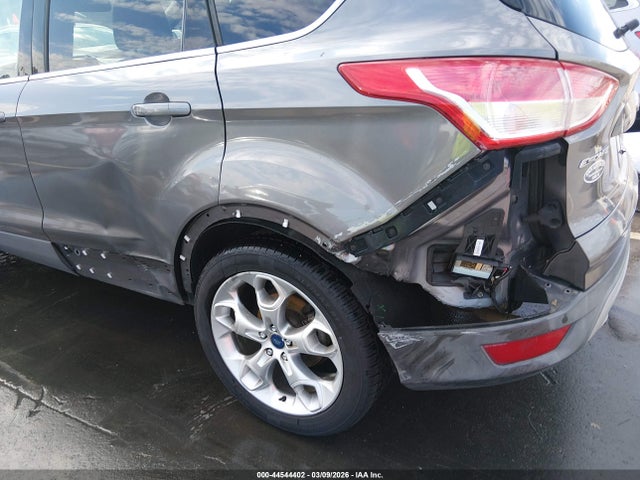
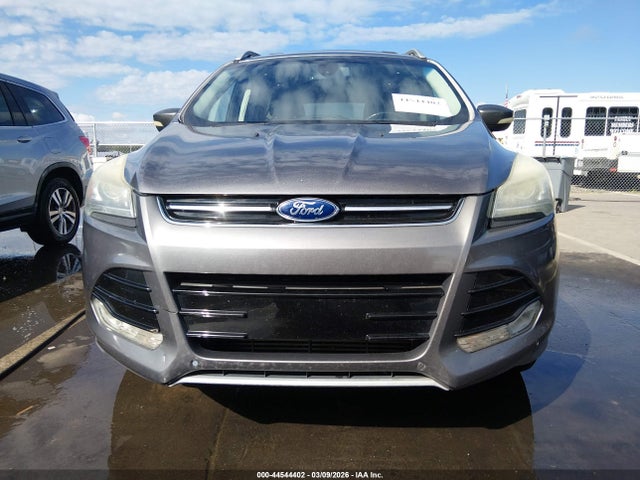
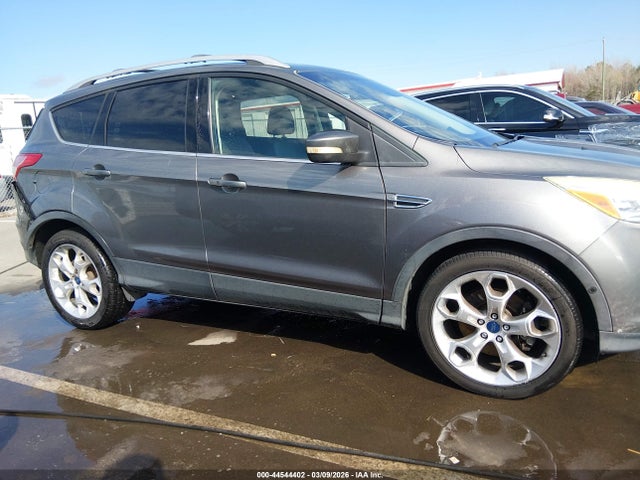
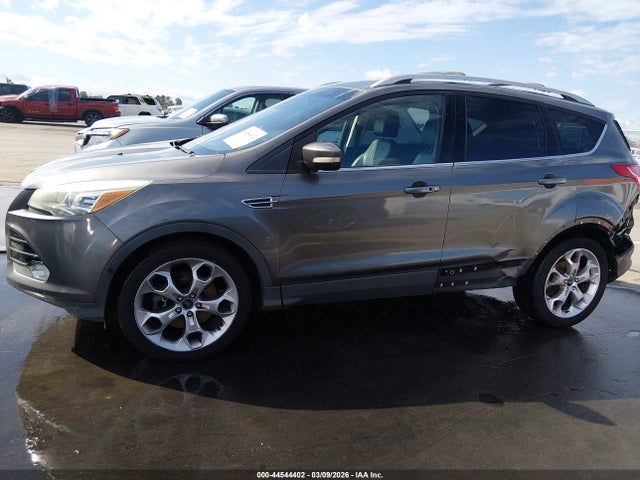
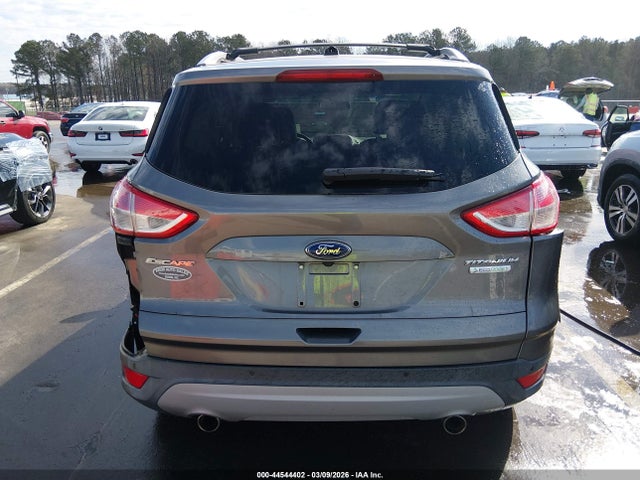
The 2013 Ford Escape Titanium presents a clean and modern profile with sharp lines typical of early-2010s SUV styling. The gray paint appears to be in decent condition for a vehicle with over 240,000 km on the odometer, though no detailed visual inspection is available. The exterior shows signs of previous damage—specifically rear and left-side impacts—as documented in its salvage history record from IAAI auction listings. This suggests that the vehicle was involved in an accident requiring substantial repair work, particularly around the rear bumper, side paneling, and possibly frame reinforcement.
The front fascia includes a bold grille with chrome accents, complemented by sleek headlamps that enhance visibility and road presence. While the body appears structurally sound post-repair, potential issues may include misaligned panels or paint mismatch at repair points. The rear section reveals a clean cargo area, though its usability could be compromised if airbags were deployed during prior collision events—a possibility given the salvage status. Overall, while the exterior maintains an attractive appearance, buyers should remain cautious about hidden structural concerns tied to its accident history.
Technical specifications
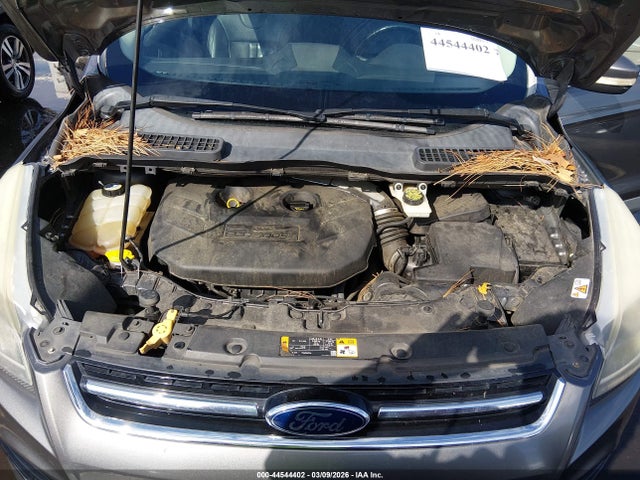
The 2013 Ford Escape Titanium equipped with a 2.0-liter four-cylinder engine delivers smooth performance suitable for daily commuting and light utility use. It operates on gasoline fuel type and features an automatic transmission, enhancing drivability in varied driving conditions. The vehicle’s drive configuration is listed as “unknown,” indicating that either the original documentation or current database lacks clarity regarding its drivetrain layout (e.g., front-wheel drive vs. rear-wheel drive).
With a gross vehicle weight rating falling within Class 1C (4,001 – 5,000 lb), this Escape model is designed for efficient urban and suburban mobility while offering adequate cargo capacity. The engine’s displacement of 2.0 liters provides balanced power output across different speeds and road types. Despite being a rebuilt salvage unit, the technical specifications suggest that key components have been restored or replaced to meet functional standards necessary for legal operation on public roads.
Known problems for this model
- Structural integrity issues due to prior accident damage may affect long-term durability.
- Potential airbag deployment during collision history could lead to safety concerns if not properly inspected.
- Rebuilt salvage units often carry hidden mechanical flaws despite appearing sound externally.
- Lack of clear drive type information complicates assessment of handling characteristics.
- Interior components might show signs of non-original repairs affecting comfort and aesthetics.
- Limited rear passenger space due to compact SUV design constraints.
- Possible mismatched paint or panel alignment following collision repair work.
History records explanation (from the API)
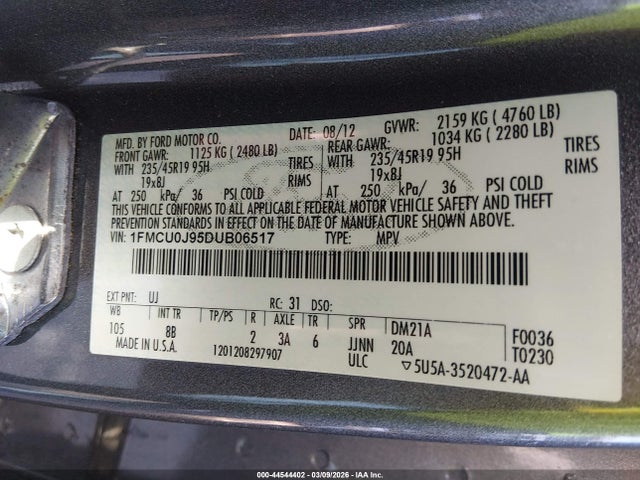
This 2013 Ford Escape, identified by VIN 1FMCU0J95DUB06517, was originally sold as a rebuilt salvage vehicle in North Carolina. Its most significant history event occurred at an IAAI auction on November 2, 2023, where it appeared under the description “REBUILT Salvage.” The damage report indicates primary damage to the rear and left side of the vehicle—suggesting involvement in a moderate-to-severe collision requiring structural repair. This is further supported by the fact that the vehicle was classified as a salvage unit after its accident history, which typically involves significant impact forces leading to extensive repairs.
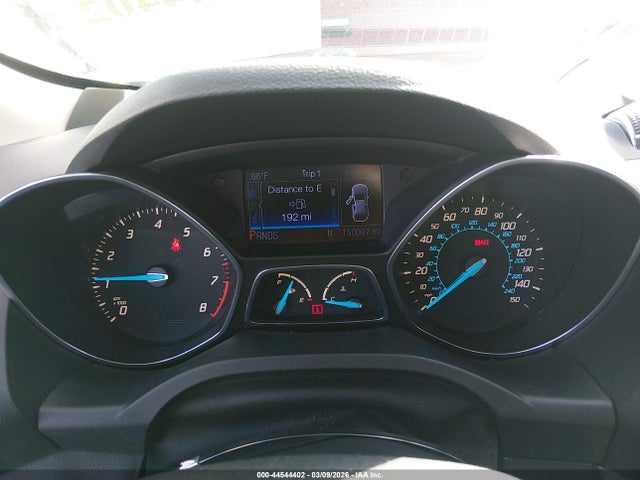
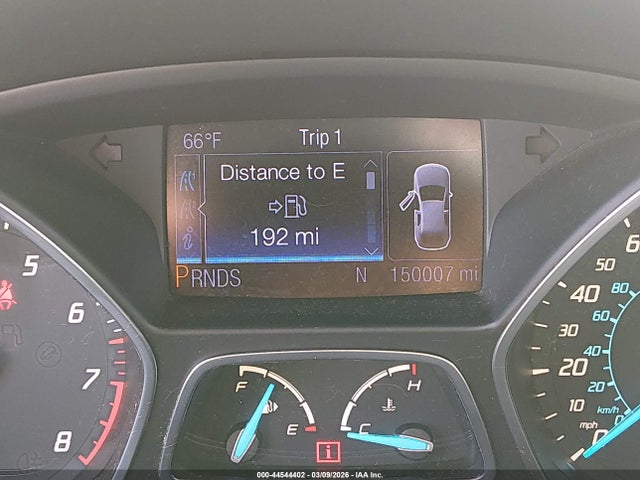
The odometer reading at the time of auction was 241,412 km (approximately 150,007 miles), indicating substantial use prior to being deemed unfit for regular road travel. The vehicle’s retail value is listed as $7,242—a figure that reflects its salvage status and high mileage. It was located at an offsite facility in Raleigh, North Carolina, during the auction process.
As a rebuilt salvage unit, this Escape likely underwent extensive repairs to address collision damage, including potential frame straightening, body panel replacement, and electrical system checks. Despite these efforts, buyers should remain vigilant about hidden structural concerns or residual issues that may not be immediately apparent upon initial inspection. The absence of specific airbag deployment status details adds uncertainty regarding the extent of safety system activation during prior incidents.
In summary, while the vehicle has been restored to operational standards, its history as a rebuilt salvage unit necessitates thorough pre-purchase evaluation—especially concerning structural soundness and long-term reliability.