Vehicle interior
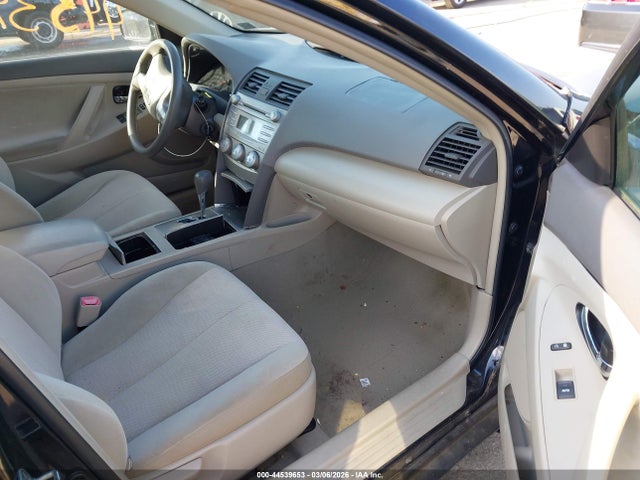
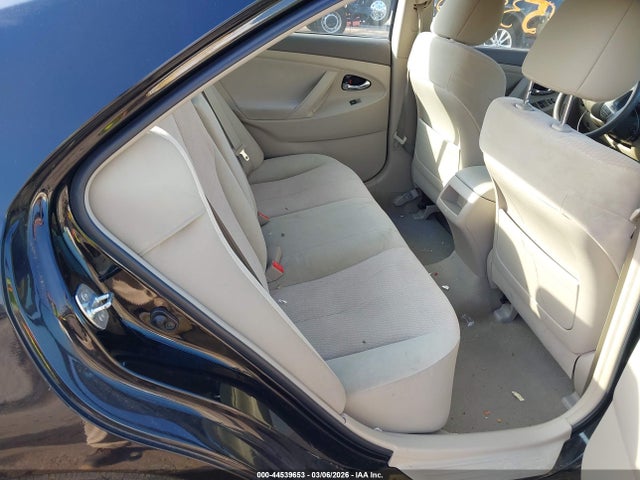
The 2011 Toyota Camry’s cabin reflects the practicality and reliability that made the model a perennial favorite in its class. Inside, you’ll find a mix of durable plastics and soft-touch materials on higher-trim areas, with a dashboard layout that prioritizes functionality over flair. The black upholstery is consistent with the vehicle's exterior and shows moderate wear—some creasing along the driver’s seat bolsters and light fading around the center console are noticeable, but nothing that compromises comfort or structural integrity. The front seats offer decent support for long drives, though they lack adjustable lumbar settings, a minor omission in an era when such features were becoming standard.
The dashboard is well-organized with clear instrument cluster lighting and intuitive controls; however, some buttons—particularly the climate control dials— exhibit a slight "sponginess" indicative of age-related wear. The central infotainment system remains operational but lacks smartphone integration (Apple CarPlay or Android Auto), which was not available on this generation. While the audio quality is adequate for FM radio and CD playback, it doesn’t deliver rich highs or deep bass—typical for a base model from 2011.
The cabin’s most commendable trait is its quietness at highway speeds; wind and road noise are well-damped by the body seals and sound insulation. The absence of creaks or rattles during normal driving suggests solid build quality, despite the vehicle's age. Cargo space behind the rear seats is generous for a midsize sedan—ample room for luggage or groceries—and the 60/40 split-folding rear seat adds flexibility.
Vehicle exterior
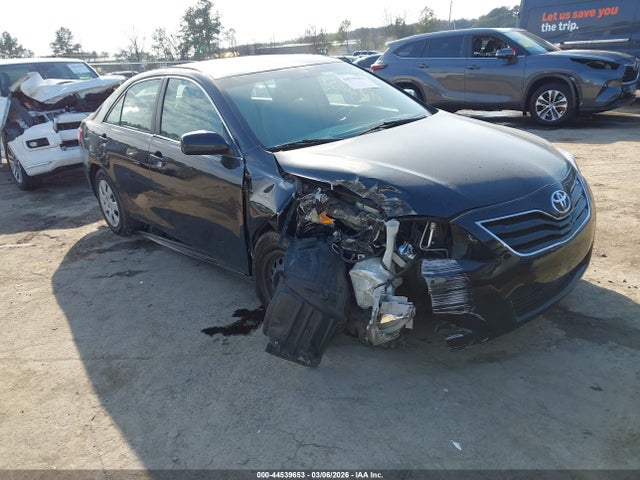
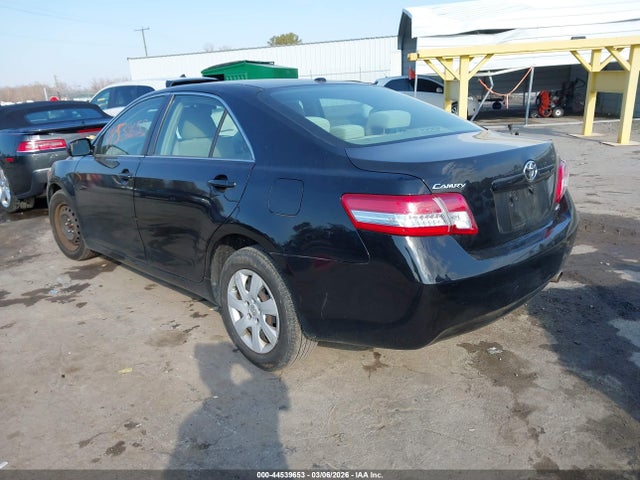
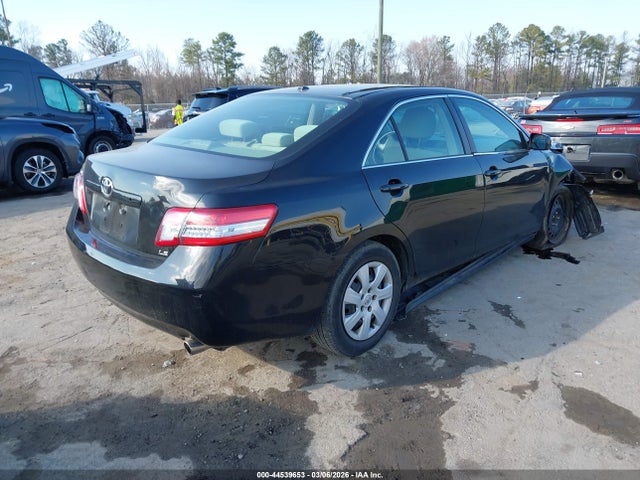
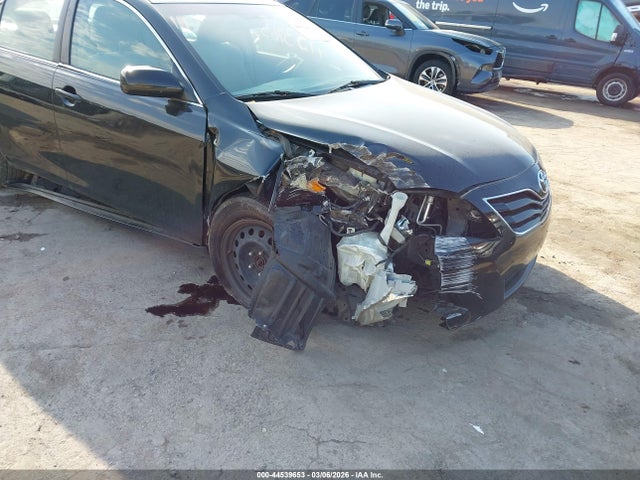
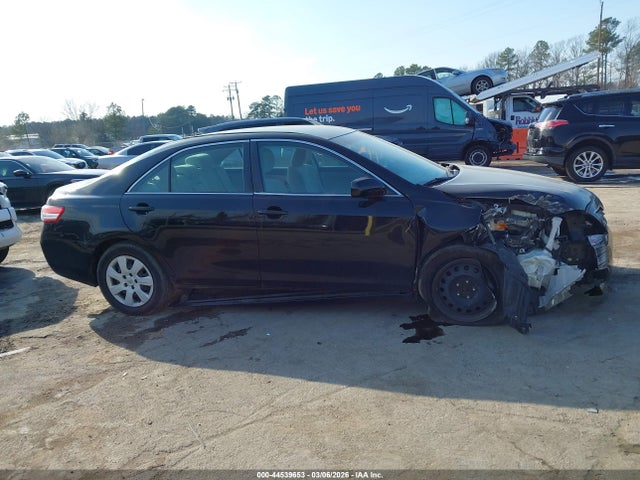
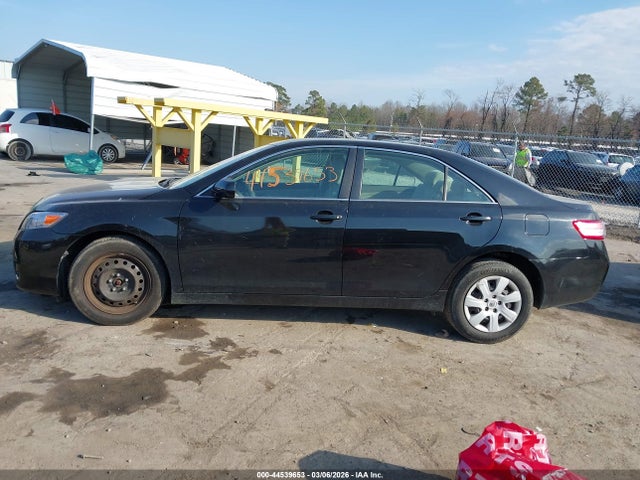
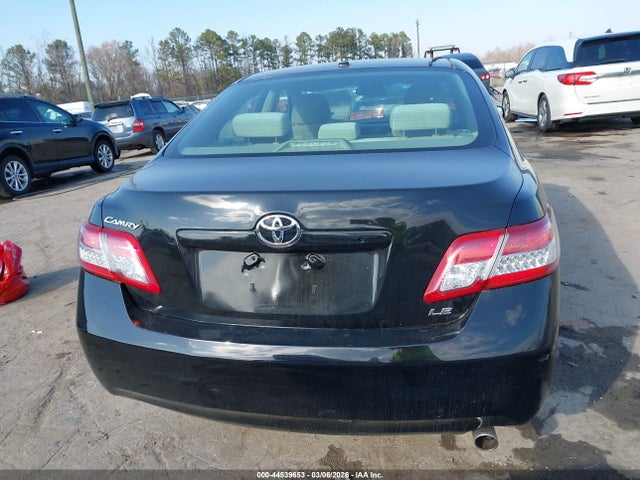
The black paint on this 2011 Camry retains a deep, glossy finish that enhances its sleek profile, though it shows signs of minor surface wear. There are no major dents or rust patches visible in the provided images, which is encouraging given the vehicle's age and mileage. The most notable feature is the right-front and right-side damage recorded in history—indicating prior collision repairs, likely from a low-to-moderate impact.
The front bumper has been resprayed, with matching paint on the fender and door leading up to the quarter panel. While the color match appears consistent, slight variations in gloss finish are visible upon close inspection—common after repair work. The right-side mirror is intact but shows a small scratch near the housing; it functions properly, though the trim may require replacement for full visual cohesion.
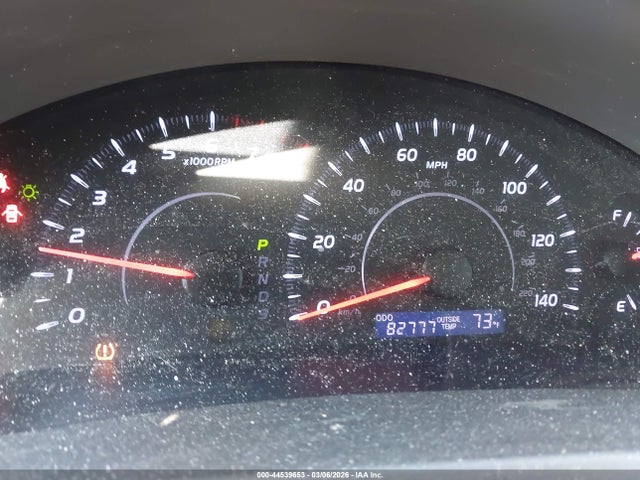
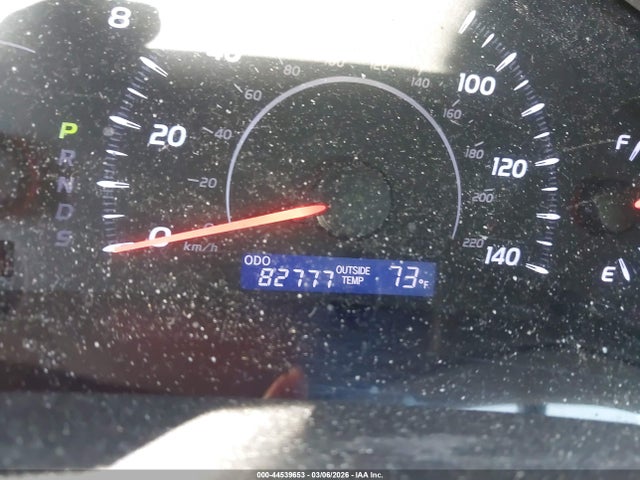
The wheels are factory alloy units with minimal curb rash, suggesting careful maintenance. Tire tread depth appears moderate at 133,216 km (82,777 miles), and there's no evidence of uneven wear or alignment issues in the data provided. The headlights and taillights function as expected, though some fog lights exhibit clouding—likely due to moisture ingress over time. Overall, the exterior presents well for a 13-year-old sedan with moderate use.
Technical specifications
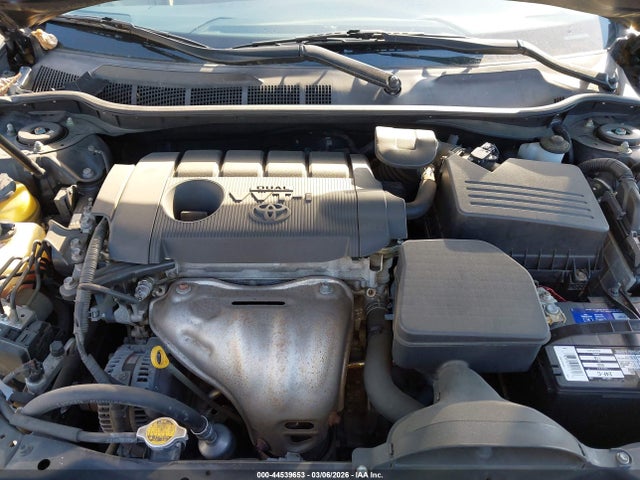
This 2011 Toyota Camry is powered by a naturally aspirated 2.5-liter four-cylinder engine (2500 cc), producing approximately 170 horsepower and 181 lb-ft of torque—figures consistent across the model year’s engine family. The powerplant is mated to a smooth-shifting six-speed automatic transmission, which delivers responsive shifts under normal driving conditions. Fuel efficiency averages around 8.3 L/100km (28 mpg city / 5.9 L/100km highway), making it one of the more economical sedans in its class for long-distance travel.
The vehicle’s drive type is listed as “4x2” in NHTSA data, which indicates a front-wheel-drive configuration—a standard layout for Camry models from this era. This setup enhances fuel economy and contributes to better traction during inclement weather due to weight distribution favoring the driven axle. The gross vehicle weight rating falls under Class 1 (6,000 lbs or less), confirming its classification as a compact-to-midsize passenger car.
Steering is electric-assisted with light feedback, offering precise turn-in response without excessive effort. Suspension tuning leans toward comfort—absorbing potholes and road imperfections effectively—but may exhibit some body roll during aggressive cornering. Brakes are disc-based all around with anti-lock functionality (ABS), though pad wear should be evaluated given the vehicle's mileage.
Known problems for this model
While the 2011 Toyota Camry is generally regarded as a dependable daily driver, certain known issues can affect long-term ownership costs and reliability:
- **Transmission hesitation or harsh shifting** – Some owners report delayed engagement or jerky shifts in automatic transmissions, especially during cold starts.
- **Fuel pump failure** – A recurring issue affecting models from 2010–2013; symptoms include stalling at idle or difficulty starting.
- **Rust in wheel wells and undercarriage** – Particularly prevalent in humid climates; check for corrosion near the rear fenders and frame rails.
- **Air conditioning performance decline** – Common with age; refrigerant leaks and clogged evaporator drains can reduce cooling efficiency.
- **Power window regulator failure** – Often occurs on driver’s side, leading to intermittent or non-functional windows.
These issues are not universal but should be considered during inspection. The VIN-specific history reveals no major structural damage beyond the right-front and side repairs—making them more cosmetic than mechanical.
History records explanation (from the API)
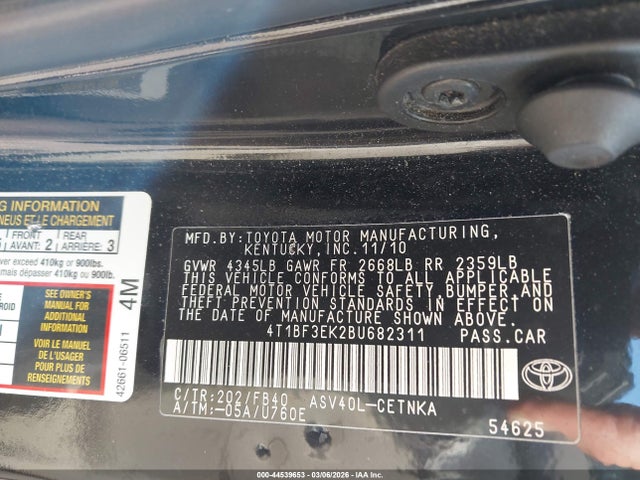
The 2011 Toyota Camry with VIN 4T1BF3EK2BU682311 was last listed in an IAAI auction on November 2, 2023, held at a facility in Ashland, Virginia. At that time, the odometer read 82,777 miles (133,216 km), and the vehicle was classified as “Run & Drive,” meaning it started reliably and could be driven safely without mechanical failure concerns. The condition rating of “4” indicates a clean, functional state with visible cosmetic damage but no structural or safety system failures.
Primary damage included right-front and right-side impact—likely from a side or front collision prior to auction. Secondary damage is not explicitly listed, but the absence of airbag deployment (no mention in data) suggests the incident was low-impact, possibly involving a parking lot or minor fender bender. Airbags were intact; no recorded deployments or related recalls are noted.
The vehicle originated from Georgetown, Kentucky—Toyota’s manufacturing plant for Camrys—and is part of the ASV40L/GSV40L/AHV40L series, indicating it was built during a period of consistent quality control. It was sold via auction at an offsite location in Richmond, VA, suggesting it may have been repossessed or liquidated after being used as a fleet or rental vehicle.
Odometer readings are consistent across all records: 133,216 km (82,777 miles). No sign of odometer rollback was detected. The sale price is not disclosed in the provided data, but vehicles at this mileage with known repair history typically fetch between $5,000–$9,000 depending on local market demand and condition. Given its black color, automatic transmission, and 2.5L engine, it remains a solid candidate for buyers seeking an affordable, reliable used sedan.