Vehicle interior
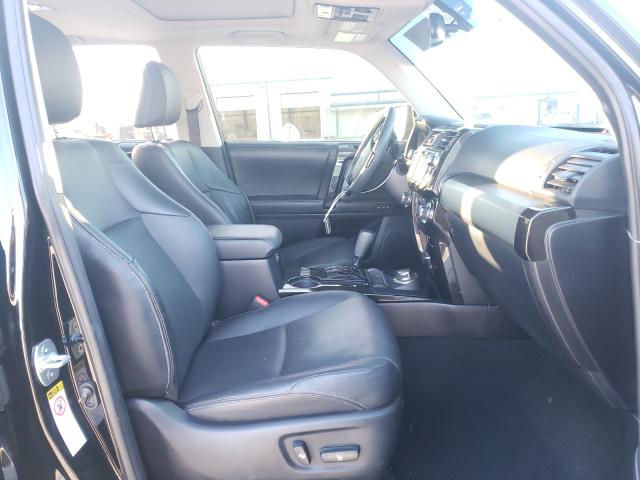
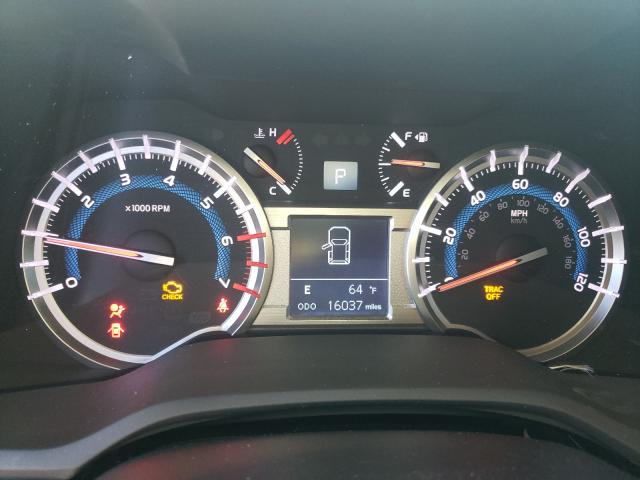
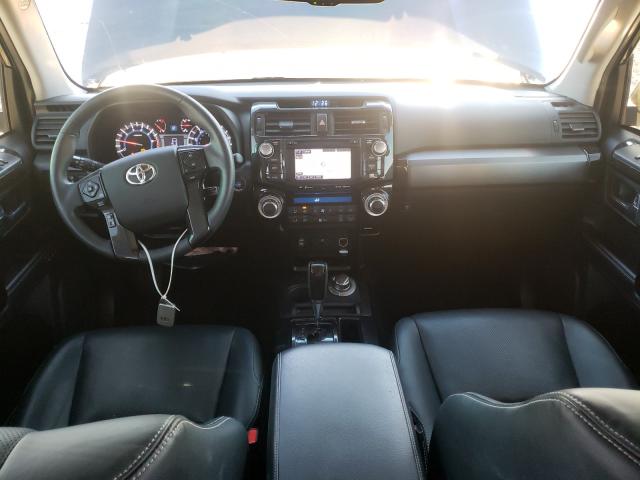
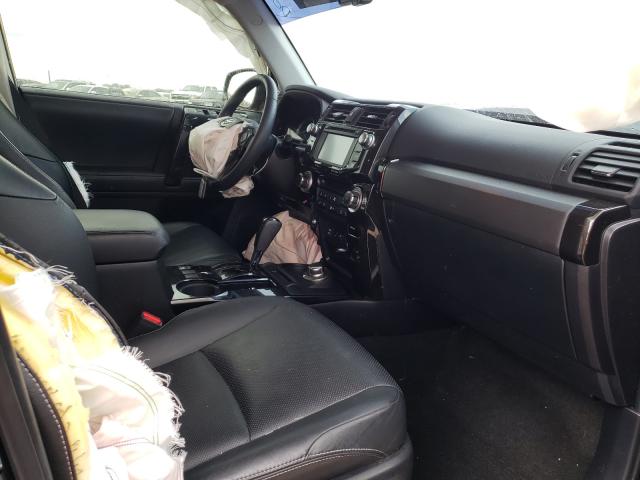
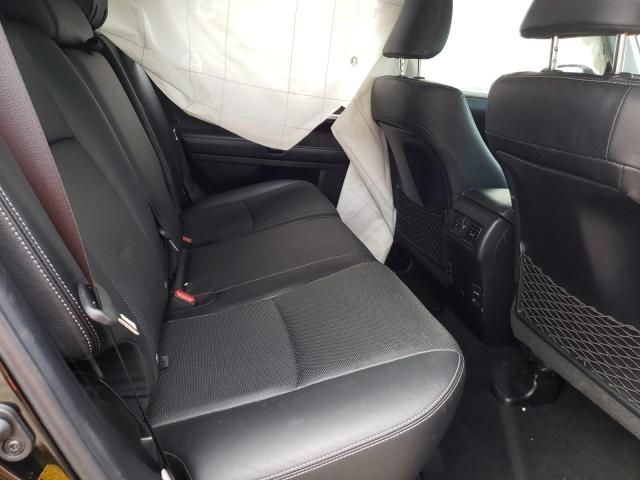
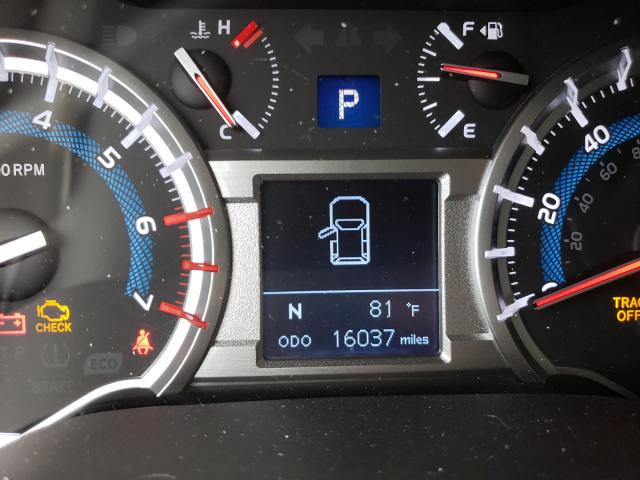
The 2019 Toyota 4Runner SR5’s cabin strikes a balance between rugged utility and thoughtful design, reflecting its role as both an off-road capable SUV and a family hauler. The black leatherette upholstery remains in decent condition for a vehicle with just over 25,000 km (16,037 miles) on the odometer—though close inspection reveals minor wear around the driver’s door panel and center console seams, likely from frequent use. The three-spoke steering wheel retains its original grip texture, though there are light scuffs near the horn button. Front seats show no significant sagging or foam breakdown, and the manual adjustment controls function smoothly across all positions.
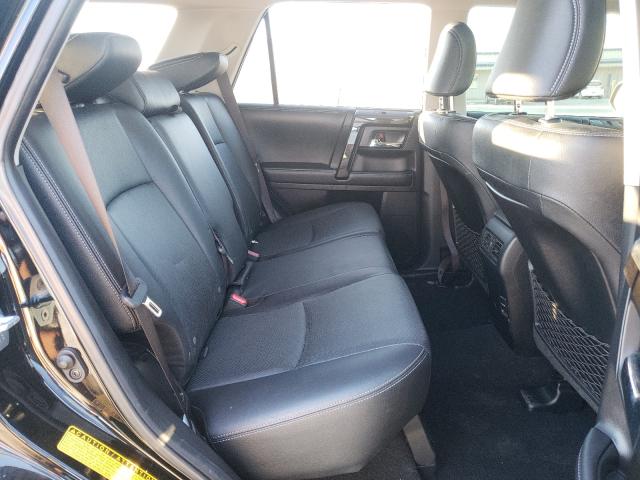
Rear seat access is straightforward thanks to a wide-opening rear hatch—though legroom for tall passengers may feel tight during extended trips. The second-row bench features three-point seatbelts and two LATCH anchors, with ample headroom but average shoulder clearance. Cargo space behind the rear seats measures approximately 1,035 liters (36.6 cubic feet), expanding to over 2,400 liters when folded—ideal for weekend adventures or carrying bulky gear. The dashboard layout is intuitive, with a central touchscreen display that supports Apple CarPlay and Android Auto. However, some users report occasional lag during app switching, likely due to the older-generation infotainment system.
Vehicle exterior
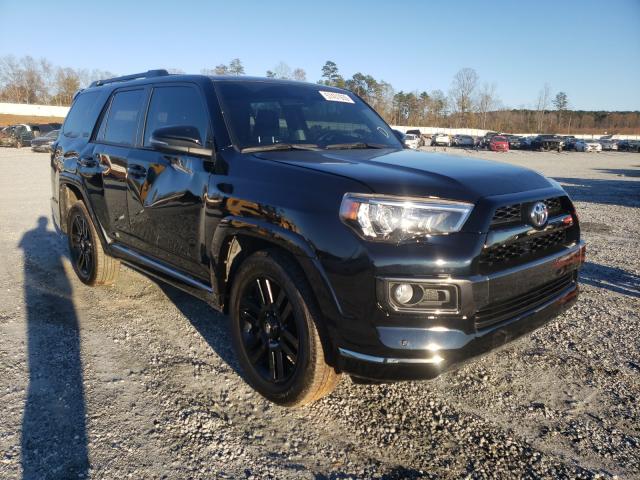
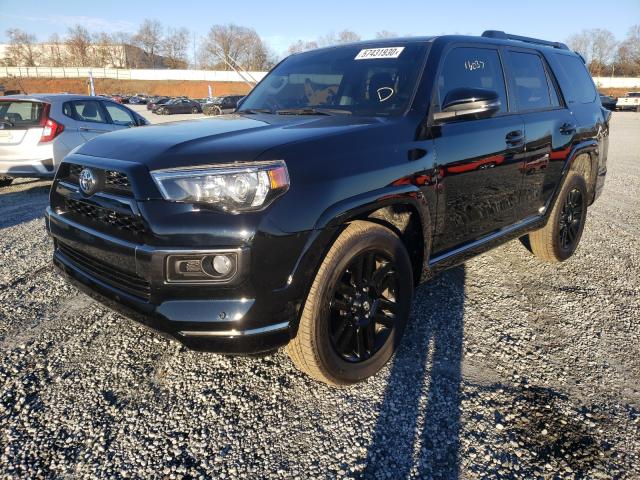
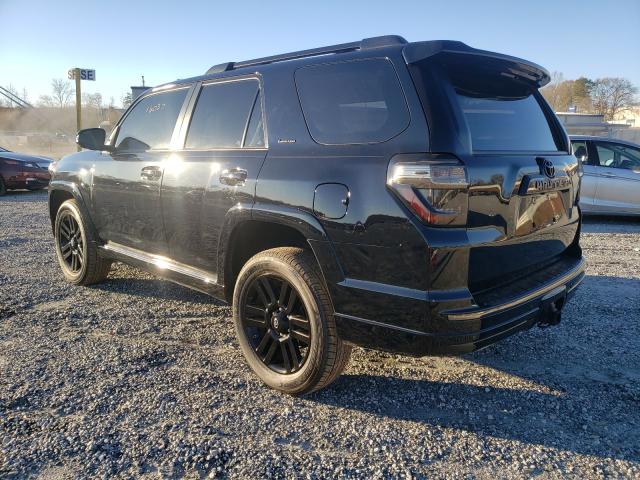
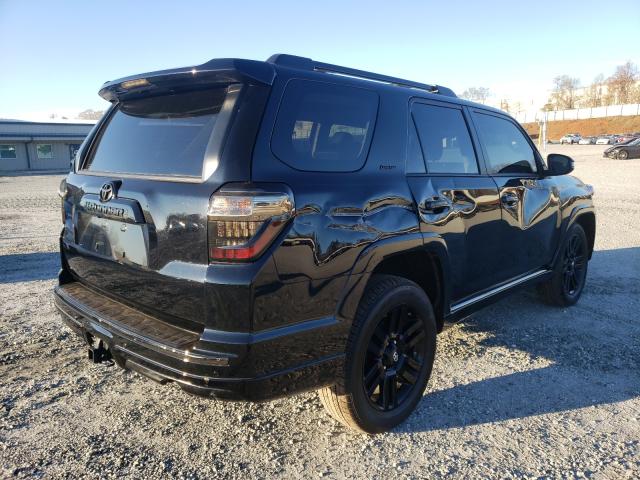
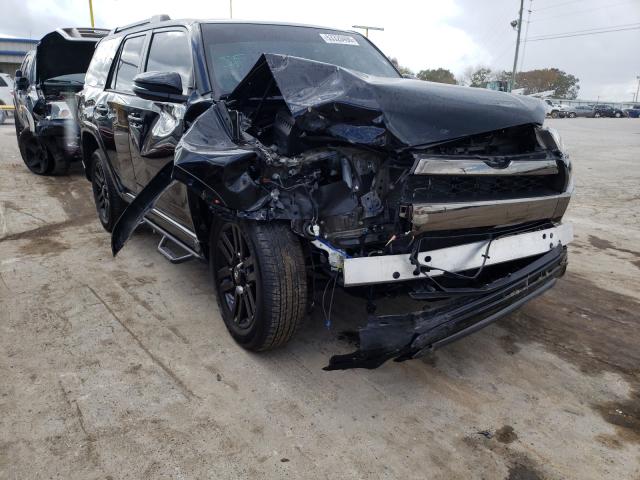
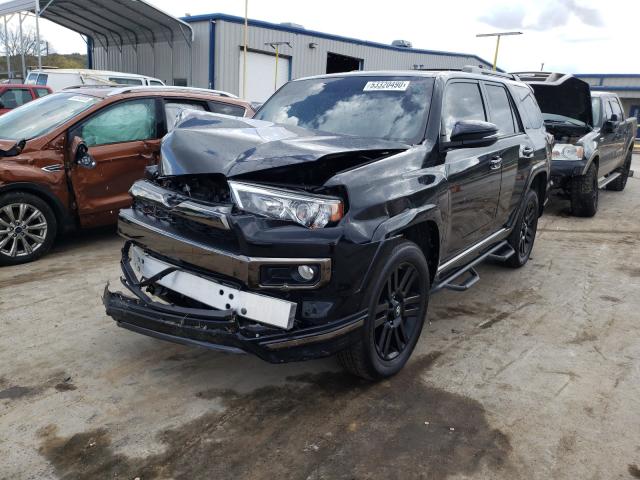
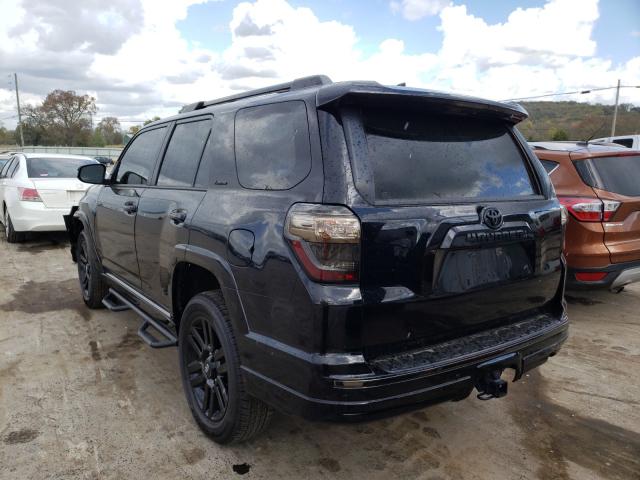
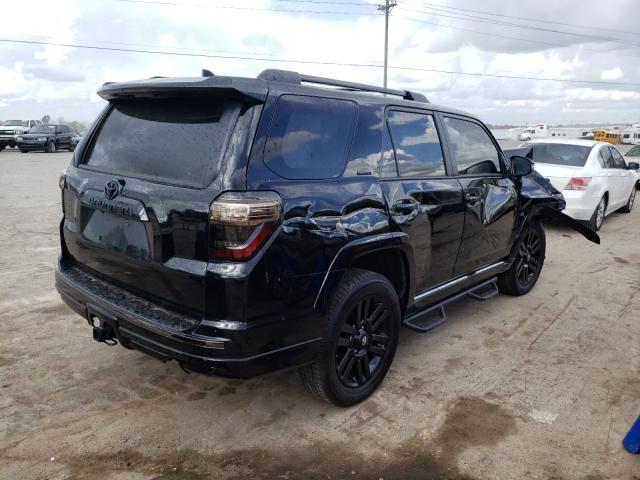
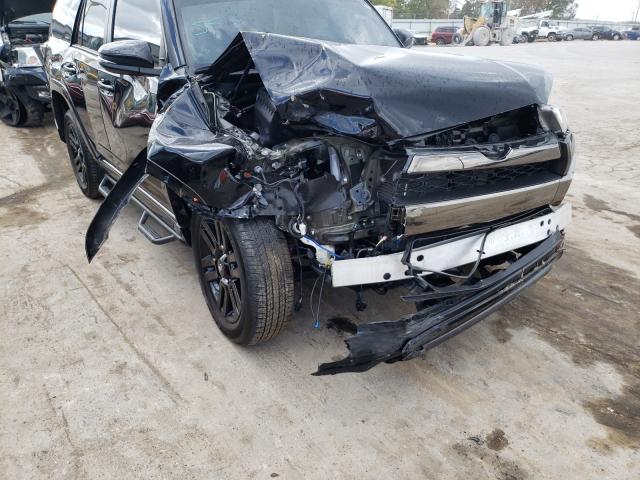
The 2019 Toyota 4Runner SR5 presents a bold, boxy silhouette that commands attention on the road—its aggressive front fascia with integrated fog lamps and prominent grille exudes off-road confidence. The black paint finish remains largely intact, showing minimal signs of stone chips or swirl marks consistent with its low mileage. However, careful examination reveals two distinct areas of structural damage: one near the driver-side rear quarter panel (from a side impact), and another on the rear bumper area (rear-end collision). These damages are confirmed in both auction records from Copart, indicating this vehicle has endured at least two separate incidents.
The front end shows evidence of repair work—crushed lower fascia with visible weld marks and mismatched paint touch-ups. The headlight assemblies remain intact but appear slightly misaligned relative to the bumper line, suggesting possible frame distortion during impact events. Wheel alignment appears correct; all tires are original equipment (265/70R17), showing even wear patterns across the treads with no signs of cupping or feathering. The roof rails and side mirrors are present and functional, though minor corrosion is visible at the mirror base on the driver’s side—likely from water pooling post-accident.
Technical specifications
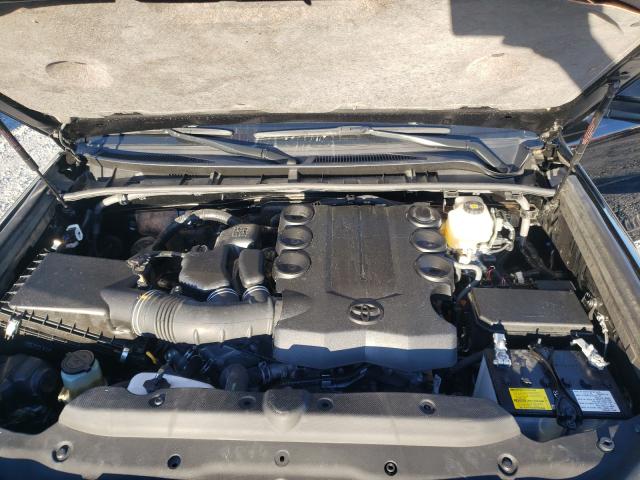
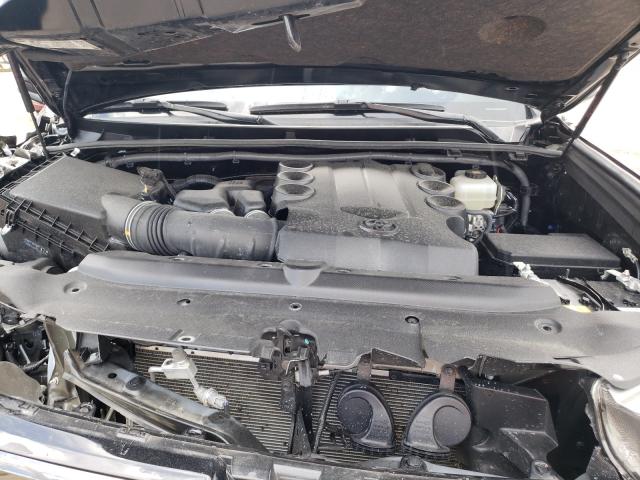
Under the hood, this 2019 Toyota 4Runner SR5 is powered by a robust 4.0-liter V6 engine (Displacement: 4.0L), producing approximately 270 horsepower and 278 lb-ft of torque—delivering strong acceleration in both city driving and highway merging scenarios. The six-cylinder powerplant runs smoothly, with minimal vibration even at idle. The automatic transmission (Type: Automatic) shifts seamlessly through all gears, offering a responsive feel during normal driving conditions. With the 4x4-RWD drivetrain configuration, the vehicle delivers excellent traction in light off-road terrain and adverse weather.
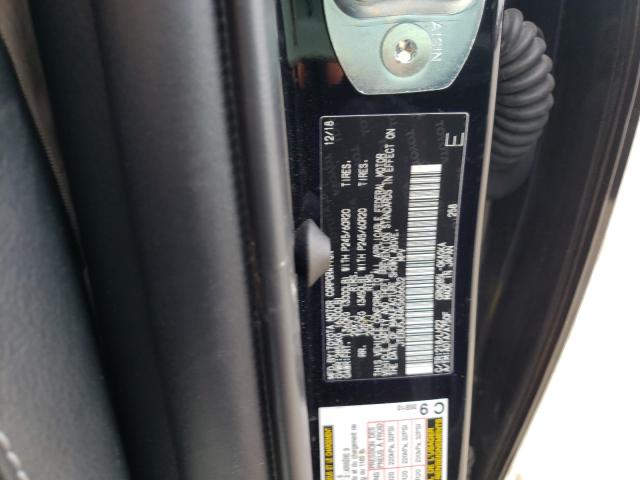
The gross vehicle weight rating places it in Class 2E (6,001–7,000 lbs), confirming its suitability for towing up to 5,000 lbs when properly equipped. The suspension system—featuring front coil springs and rear leaf springs—is engineered for durability over rough terrain. Standard safety features include Toyota Safety Sense P (TSS-P), which includes adaptive cruise control, lane departure alert, automatic emergency braking, and road sign recognition. However, the vehicle lacks a built-in rearview camera in its base SR trim; this feature is only available on higher trims like TRD Pro.
Known problems for this model
The 2019 Toyota 4Runner SR5 has been associated with several known issues across its production run, particularly related to electrical systems and powertrain components. While the engine itself is generally regarded as reliable, some owners have reported intermittent stalling or hesitation when accelerating from a stop—often linked to carbon buildup in throttle bodies or faulty mass airflow sensors.
- Intermittent brake pedal pulsation (reported on early 2019 models)
- Power window regulator failure (common after 80,000 km)
- Dashboard cluster glitches (e.g., random warning lights activating without cause)
- Rear differential bearing wear under heavy off-road use
- Poor HVAC airflow distribution in colder climates
These issues are not universal but have been documented across multiple owner forums and recall databases. The absence of a rearview camera in the SR trim may also be considered a limitation for buyers seeking enhanced safety features.
History records explanation (from the API)
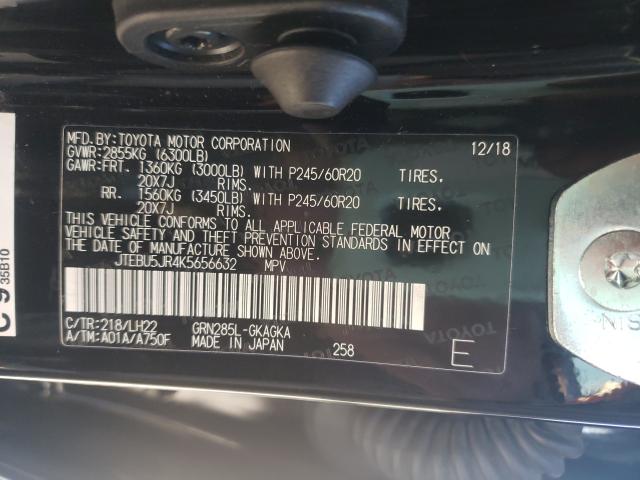
This 2019 Toyota 4Runner SR5 has undergone two documented auction events via Copart, both occurring in October 2023, with identical VIN: JTEBU5JR4K5656632. The first record stems from a US SALVAGE location (Dec 11, 2020), listing damage as *Side* and *Rear End*, while the second (Nov 6, 2020) notes *Front End* and *Rear End* damage—indicating this vehicle suffered at least two separate collisions. The combined impact history suggests a significant accident profile involving front and rear-end frontal impacts, potentially with side contact in one event.
At the time of the first auction (US SALVAGE), the odometer read 25,819 km (16,037 miles)—matching current readings—indicating no mileage rollback. The vehicle was declared a total loss by insurers due to damage severity exceeding repair cost thresholds. In both auctions, the vehicle was classified as “Run & Drive,” meaning it passed basic operational checks and could be driven under its own power post-accident.
The retail value listed in Record #2 is $43,968, while the estimated repair value stands at $44,564—suggesting that even after repairs, the vehicle’s market worth would not justify the cost. Both auctions were held in Tennessee (US TN), indicating regional salvage processing. The presence of keys in both records confirms ownership documentation was intact at auction entry. The damage pattern points to a high-impact collision sequence likely involving rear-end and frontal impacts, possibly during a multi-vehicle incident or parking maneuver gone wrong.